The new MELAtherm 20 in XXL: Discover now >

|
    • Unbenannt-1Best Sellers
    • Autoclave Tile
      • premium-klassePremium Class
      • Prime LinePrime Line (Class B)
      • Pro Line Product picturePro Line (Class B)
      • MicrosoftTeams-image (1196)-minPro Line (Class S)
      • 150 2Vacuclave 105 / 305
      • Vacuclave 550 Menu ElementVacuclave 550
      • Grossautoklaven-SystemloesungCliniclave 45 Series
      • 24-BL-StoererVacuklav 24 BL+
      • MELAquick ProduktfotoMELAquick Series
      • MELAtronic ProduktfotoMELAtronic Series
      • Zubehör Careclave ProduktfotoAccessories & components for autoclaves
    • Grossautoklaven-Systemloesung
      • Cliniclave 45 Produktfoto für Kaegorie MenuCliniclave 45
      • Cliniclave 45 M ProduktfotoCliniclave 45 M
      • Cliniclave 45 D ProduktfotoCliniclave 45 D
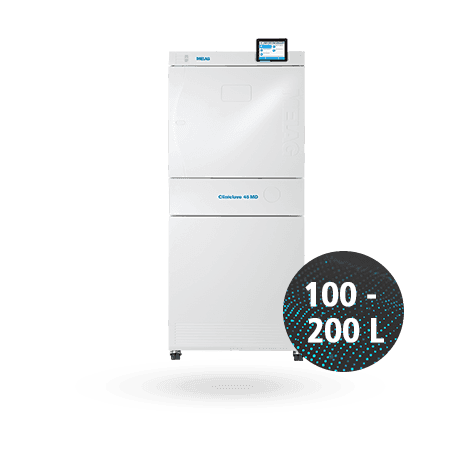
      • Cliniclave 45 MD ProduktfotoCliniclave 45 MD
      • Vacuclave 550 Menu ElementVacuclave 550
      • Großautoklaven Zubehör ProduktfotoAccessories & components for large autoclaves
    • 150 2
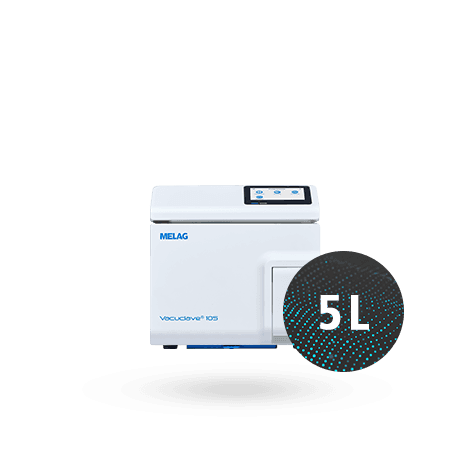
      • 150-ohne 1Vacuclave 105
      • 350-ohne 1Vacuclave 305
      • MELAquick ProduktfotoMELAquick Series
      • MELAtronic ProduktfotoMELAtronic Series
    • mt20-gross
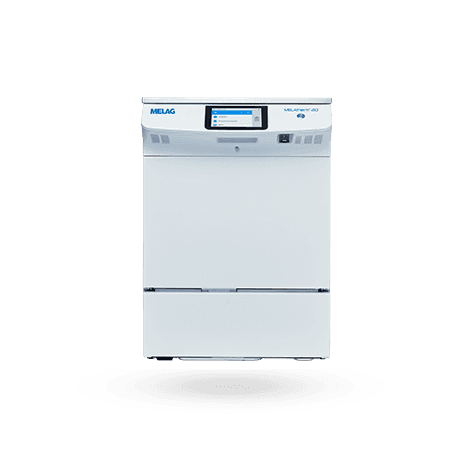
      • mt20-grossMELAtherm 20
      • MT10EVO_Produkt_geschlossenMELAtherm 10 Evolution
      • Körbe und Adapter ProduktfotoLoading patterns
      • Collage-Korb 3-minBaskets & Adapters
      • teaser-washcheckMELAcontrol Wash Check
      • Regenerating SaltRegenerating Salt
      • MELAtherm Zubehör MenuAccessories & components for thermal disinfectors
    • Careclave_Produkt_offen für Menü
      • Careclave_Produkt_offen für MenüCareclave
      • Menu Foto Carebox BlueCarebox Blue
      • Carebox Green Menu BildCarebox Green
      • Cooling Box ProduktfotoCooling Box
      • Care Oil ProduktfotoCare Oil
      • Zubehör Careclave ProduktfotoAccessories & components for Careclave
    • MicrosoftTeams-image (1170)-min
      • MicrosoftTeams-image (1420)-min(1)MELAseal 300
      • MELAseal 200 Menu FotoMELAseal 200
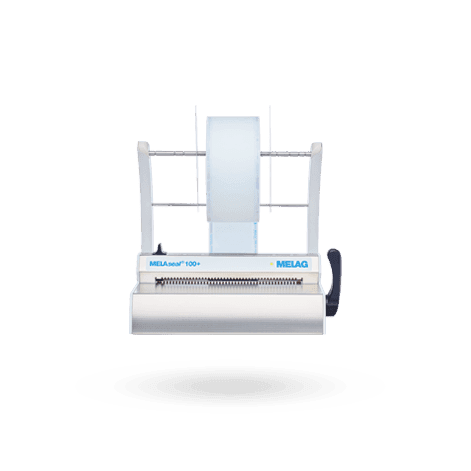
      • MELAseal 100 Bild MenuMELAseal 100+
      • MicrosoftTeams-image (1167)-minRoutine Testing
      • Siegelnahtfestigkeit MaschineSeal Seam Stability Test
      • Zubehör MELAseal MenuAccessories & components for sealing devices
    • MicrosoftTeams-image (1169)-min
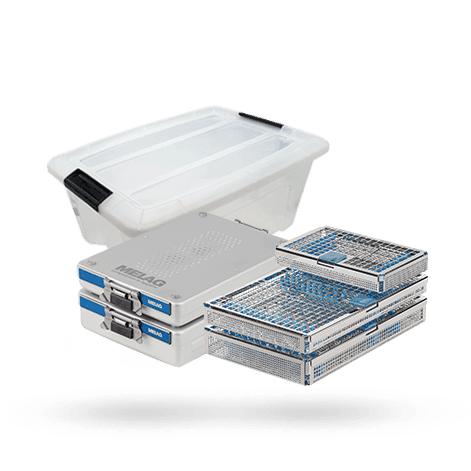
      • Trays neuMELAstore Trays
      • OTS MenüMELAstore Tray Ophthalmology
      • MELAstoreMELAstore Boxes
      • SterilisierbehälterSterilization Containers
      • me01100 1MELAstore transport box
      • Zubehör PackagingAccessories & components for sterile goods storage
    • MicrosoftTeams-image (1168)-min
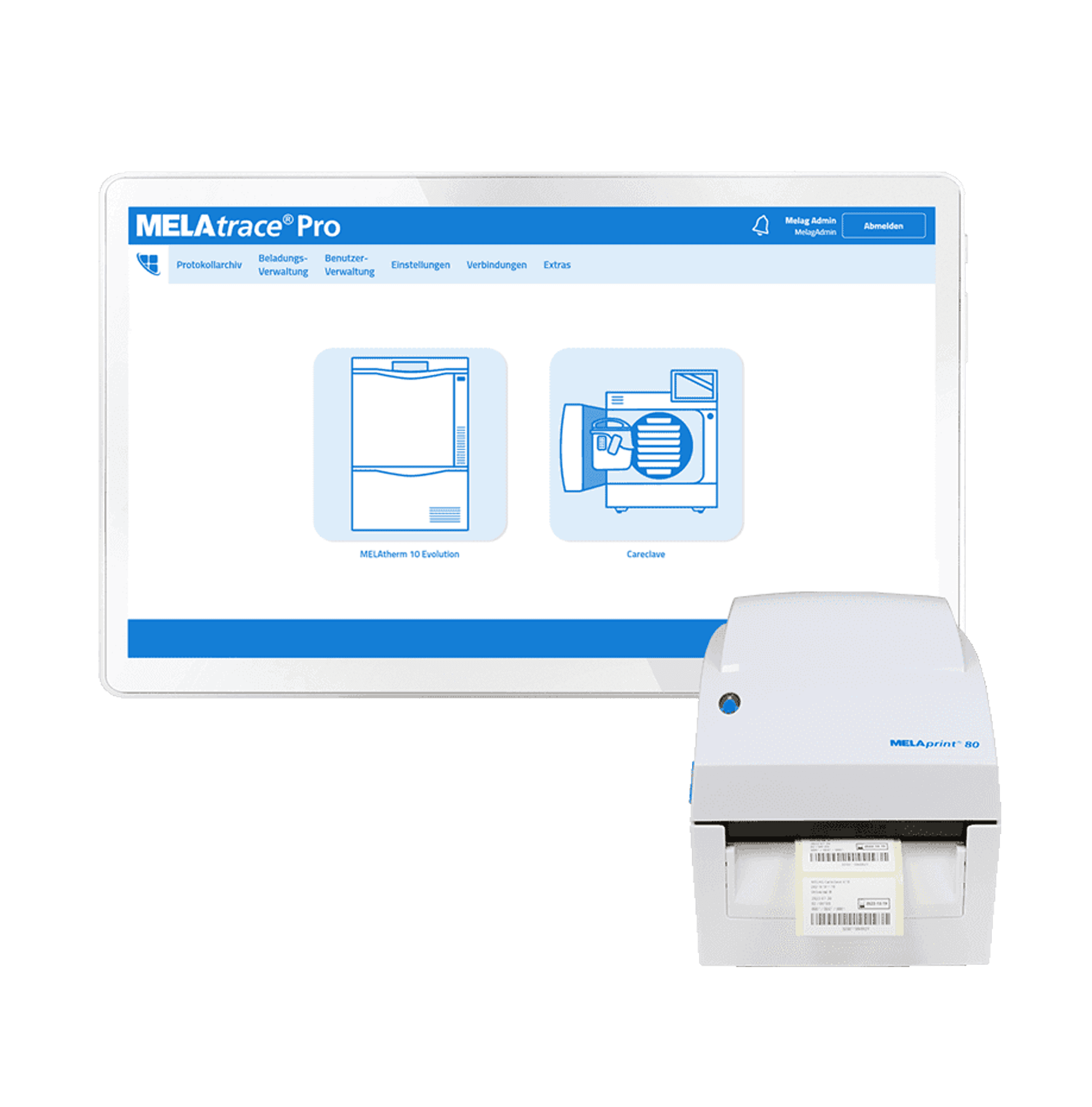
      • MELAtrace-Pro Menu IconMELAtrace
      • MELAverse Produkt KachelMELAverse
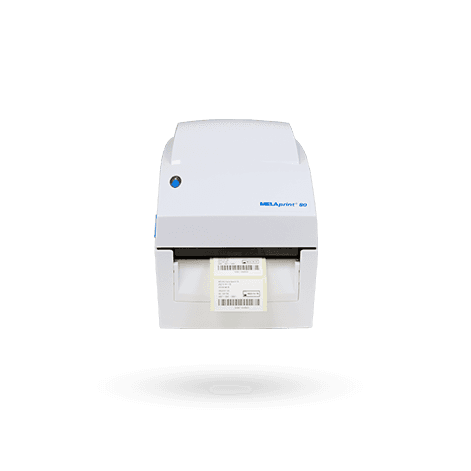
      • MELAprint 80MELAprint 80
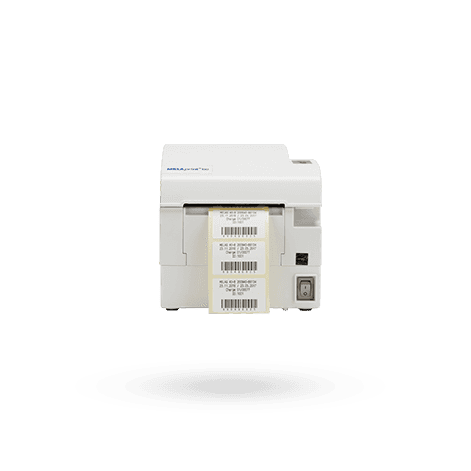
      • MELAprint 60 ProduktfotoMELAprint 60
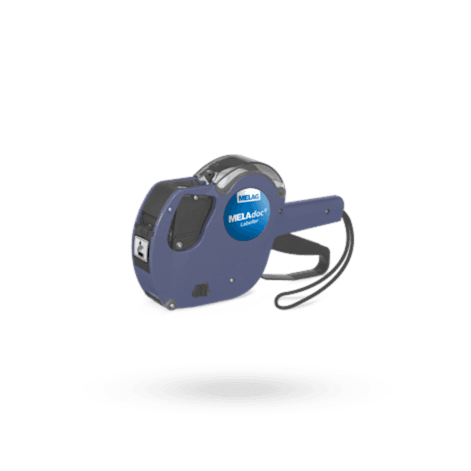
      • MELAdoc Titelbild-blau MELAdoc
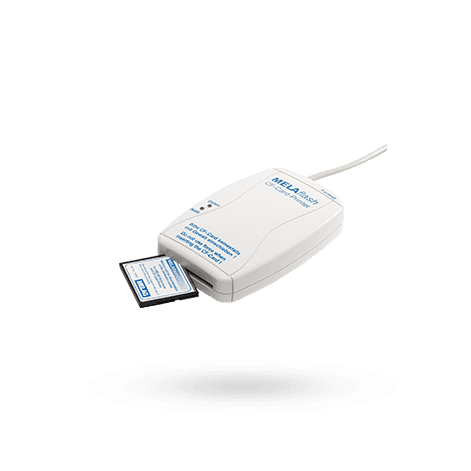
      • MELAflash ProduktfotoMELAflash
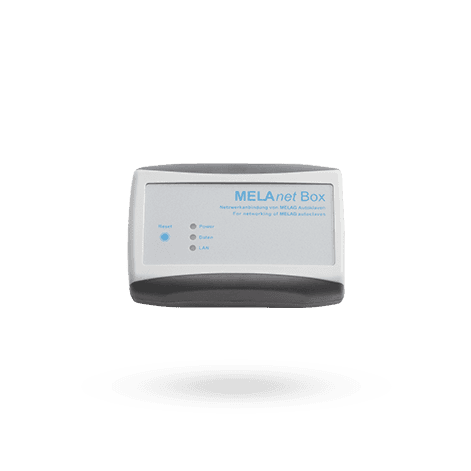
      • MELAnetBox Menu BildMELAnet Box
      • Zubehör DokuAccessories & components for documentation
    • MELAverse Produkt KachelMELAverse
    • MicrosoftTeams-image (1171)
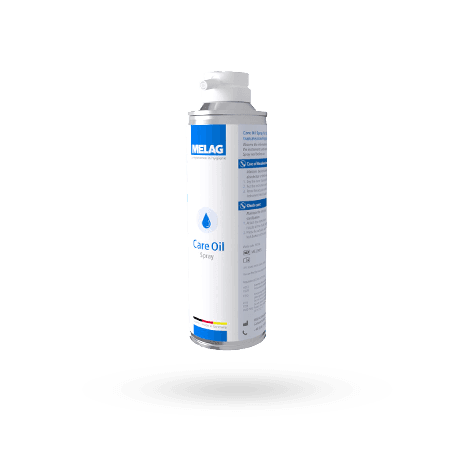
      • MicrosoftTeams-image (1052)Care Oil Spray
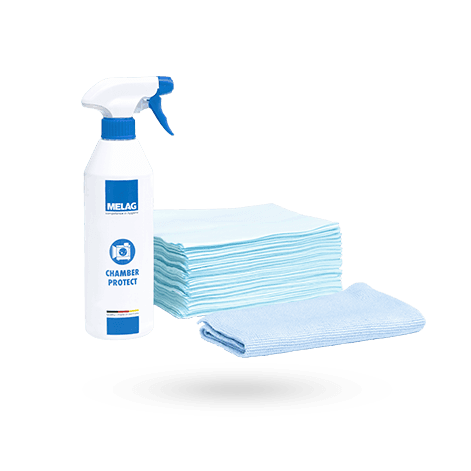
      • MicrosoftTeams-image (1053)Chamber Protect
    • MicrosoftTeams-image (1172)-min
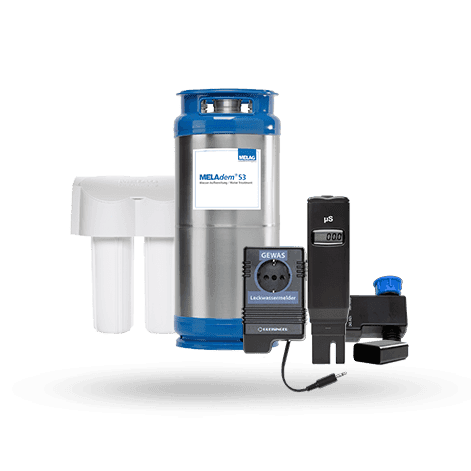
      • MELAdem 40 ProduktfotoMELAdem 40
      • MELAdem 47 ProduktfotoMELAdem 47
      • MELAdem 53 Menu FotoMELAdem 53
      • MELAdem 53 CMELAdem 53 C
      • MELAdem 56 ProduktfotoMELAdem 56
      • MELAjet ProduktfotoMELAjet
      • MELAtest 60 ProduktfotoMELAtest 60
      • Zubehör WasserAccessories & components for water treatment
    • MicrosoftTeams-image (1167)-min
      • teaser-washcheckMELAcontrol Wash Check
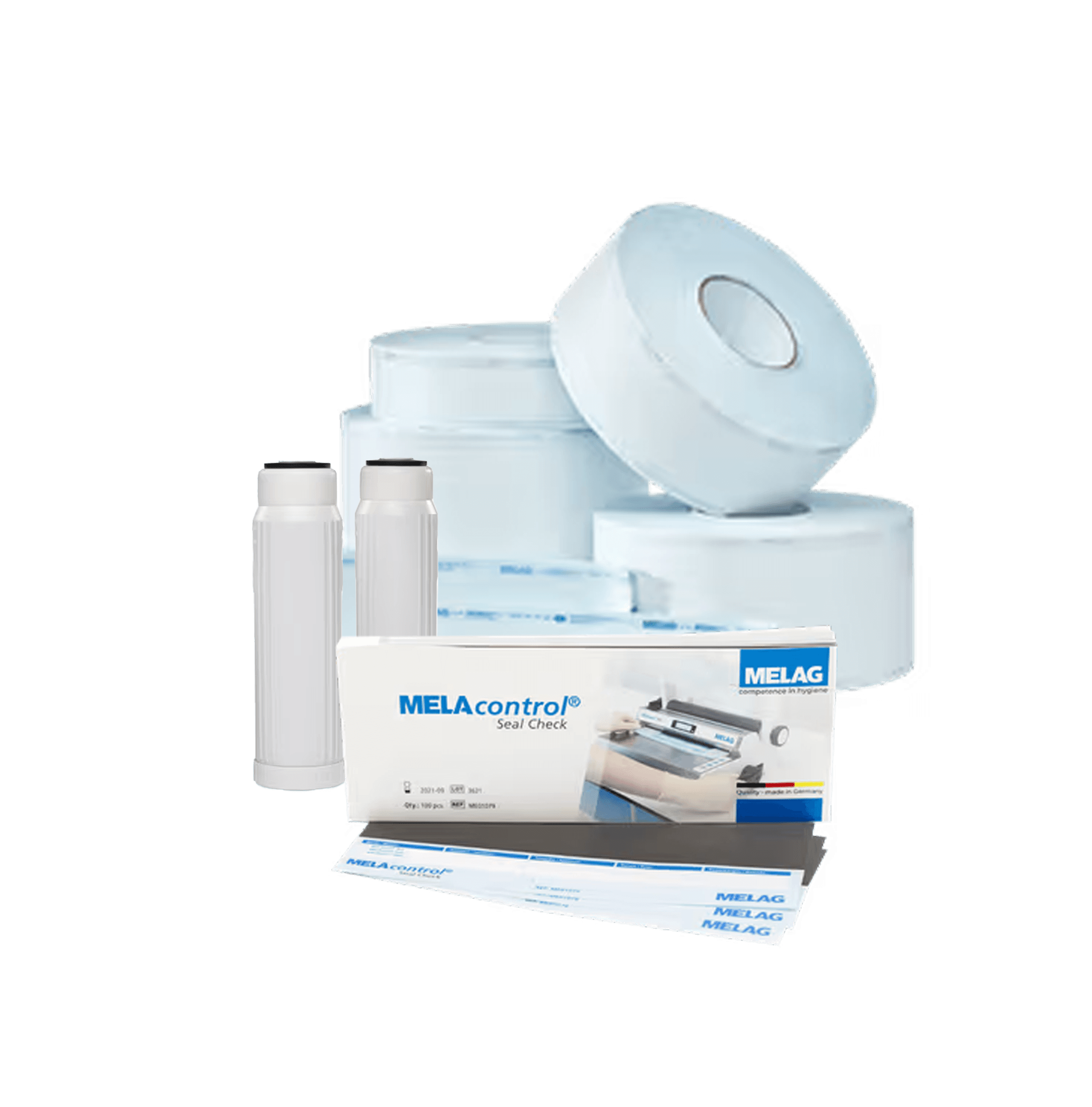
      • MELAcontrol Seal Check Routine Prüfung MenuMELAcontrol Seal Check
      • Siegelnahtfestigkeit MaschineSeal Seam Stability Test
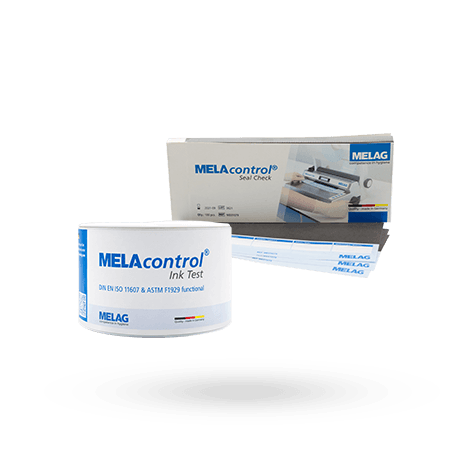
      • Menu ink TestMELAcontrol Ink Test
    • MELAfol ProduktfotoConsumables
    • Downloadcenter Tile ImageDownloadcenter
    • Service-troubleshootingTroubleshooting
    • Video Tutorials Autoclave
      • Careclave Tutorial MenuCareclave Tutorials
      • Autoklaven Tutorial Autoclaves Tutorials
      • Tutorial Thermodesinfektor MenuWasher-Disinfector Tutorials
      • Siegelgeräte Menu TutorialMELAseal 200 Tutorials
      • MS300 BalkenteaserMELAseal 300 Tutorials
      • MELAtrace TutorialMELAtrace Tutorials
    • Gerätertegistrierung Menu BildDevice Registration
    • Techniker-schulung Menü BildTechnical Training
    • KonfiguratorConfigurator
    • save moneyPromotions
    • Entdecken-referenzSuccess Stories
    • Hygiene Hub TileInspiration & Tips
    • Tutorials TileNews
    • MELAG FamilieFamily Business & Jobs
    • Beratung-uebersicht
      • Beratung-uebersichtBook a consultation: On-site, online or in a showroom
      • entdecken-ansprechpartnerYour sales contacts
      • Messen & Kongresse Bild MenuFairs & Congresses
      • beratung-kontaktformularContact form
      • Gebauer GFCompany & Apprenticeship
    • entdecken-ansprechpartner
      • Beratung-uebersichtBook a consultation: On-site, online or in a showroom
      • entdecken-ansprechpartnerYour sales contacts
      • Messen & Kongresse Bild MenuFairs & Congresses
      • beratung-kontaktformularContact form
      • Gebauer GFCompany & Apprenticeship
    • Messen & Kongresse Bild MenuFairs & Congresses
    • beratung-kontaktformularContact form
    • Gebauer GFCompany & Apprenticeship
    • Dental
    • Medical
    • Ophthalmo
    • Hospital
    • Veterinary
    • Podiatry
Select language and country

Newsletter Subscription

Register for our newsletter and always stay up to date.

Products
  • Instrument Reprocessing
  • Autoclaves
  • Large Autoclaves
  • Washer-Disinfectors
  • Careclave
  • Sealing Devices
  • Accessories & components
Service
  • Downloads
  • Troubleshooting
  • Video Tutorials
  • Blog
Company
  • We are MELAG
  • Sustainability
  • History
  • News
  • Contact
  • Instrument Reprocessing
  • Autoclaves
  • Large Autoclaves
  • Washer-Disinfectors
  • Careclave
  • Sealing Devices
  • Accessories & components
  • Downloads
  • Troubleshooting
  • Video Tutorials
  • Blog
  • We are MELAG
  • Sustainability
  • History
  • News
  • Contact
  • Imprint
  • Terms and Conditions
  • Privacy
  • Whistleblower
  • Open Cookie Settings

© MELAG Medizintechnik GmbH & Co. KG

Placeholder for alt text
Sealers Product World 2026

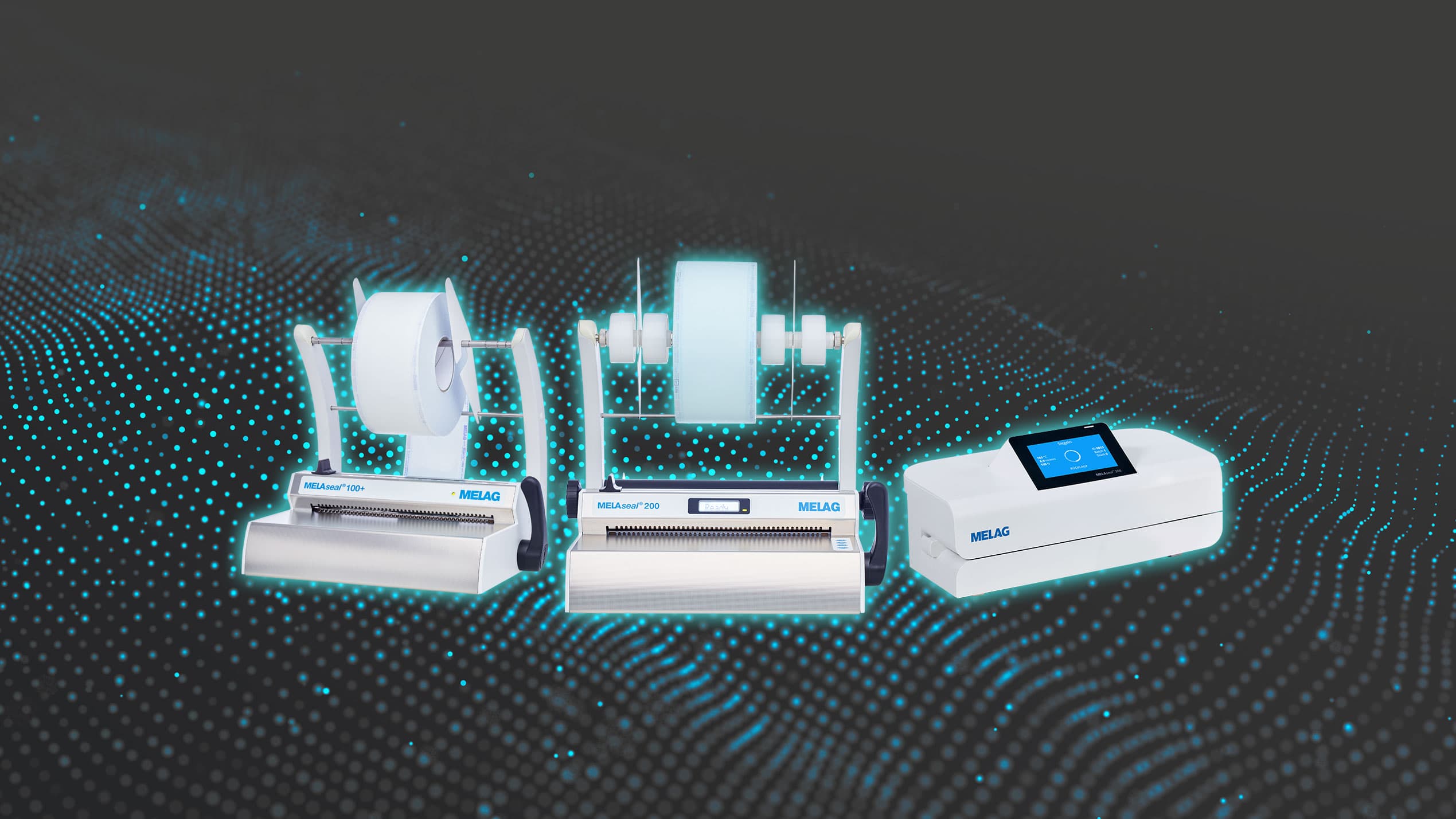
Our Sealing Devices.
For your packaging process.

Protect your instruments from re-contamination: Learn more about reliably packaging instruments with a bar or rotary sealer.

Unsure about your choice? You can find our sealing device product finder here!

Enable YouTube content

To play this video, please allow cookies and other external services from YouTube.

MELAseal 200 Product Photo

MELAseal 200

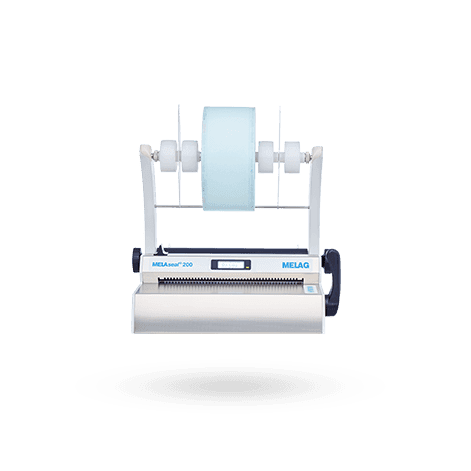
The reinvention of the sealing device combines the advantages of a compact bar sealer with the documentation of a rotary sealer.

Learn More
Request a quote
MELAseal-100-komfort Teaser

MELAseal 100+

More than basic: The compact bar sealer convinces with reliability in the packaging process.

Learn More
Request a quote

Expert guidance - just for You.

Get in touch with our international MELAG hygiene experts: We’re here to advise you personally and help you find the best hygiene solution tailored to your requirements.

Arrange a callback now
Our contact persons
Contact picture
Video Tutorials & Digital Tools

Instrument reprocessing can be this smart.

Enable YouTube content

To play this video, please allow cookies and other external services from YouTube.

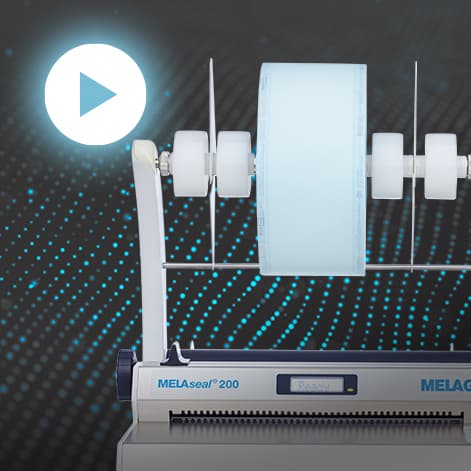
MELAseal 200 Tutorials

Enable YouTube content

To play this video, please allow cookies and other external services from YouTube.

Enable YouTube content

To play this video, please allow cookies and other external services from YouTube.

Enable YouTube content

To play this video, please allow cookies and other external services from YouTube.

Enable YouTube content

To play this video, please allow cookies and other external services from YouTube.

Enable YouTube content

To play this video, please allow cookies and other external services from YouTube.

Functionality of sealing devices

Rotary sealers vs. bar sealers

The MELAseal Pro rotary sealer and the MELAseal 200 bar sealer fulfil the most-demanding requirements placed on reliability and efficiency. Both sealing devices produce safe seal seams. The sealing devices are validatable and provide legally-compliant documentation of the process-relevant sealing parameters pressure, temperature and time. The difference between them lies in the number of instruments to be wrapped.

Enable YouTube content

To play this video, please allow cookies and other external services from YouTube.

300 cut

MELAseal 300

The compact rotary sealer with large Smart-Touch display not only fits into any reprocessing line, but also into any volume of instruments.

Learn More
Request a quote

Enable YouTube content

To play this video, please allow cookies and other external services from YouTube.

Collage-MELAseal 1 (1)

Struggling to choose the right sealing device?

With our product finder, you can find the right sealing device for your practice in a flash.

The sealing device product finder
Siegelgerät Verpacken richtig gemacht

How to wrap instruments using a sealing device

Surgical instruments are sterilised wrapped after cleaning and disinfection. Please note the following requirements of EN ISO 11607 when packaging individual instruments with a sealing device: Fill the foil packaging to a maximum of 75 %, Minimum distance of 3 cm between seal seam and instrument, Minimum width of the seal seam of 6 mm, The overlap behind the seal seam of at least 1 cm, When opening, observe the peel direction of the film packaging

Watch tutorial video

Bar Sealing Device

Compact bar sealers are an affordable solution for wrapping single instruments. The intuitive operation of the bar sealers produce reliable seal seams which comply with international standards. The integrated cutting knife and the roll dispenser make the MELAseal 200 and MELAseal 100+ the ideal sealing devices with low setup space requirements.

Product Finder: Sealers
Siegelgerät Verpacken richtig gemacht
Bild für Routine-Prüfung Siegelgerät hochformat
Routine Testing

Checking the seal seams in practice and clinic

A reliable seal seam can only be guaranteed if the parameters sealing temperature, sealing duration and sealing pressure are fulfilled. Regular tests verify the quality of the seal seam in practice and clinic.

Perform and check a test seal seam once a day before starting work by performing a visual and mechanical check. To perform the peel test, sterilise the sealed film packaging in an autoclave. After removing it from the steam steriliser, pull apart the seal seams slowly in the peel direction. The visual check is performed to check that the film has completely released itself from the paper. No fraying of more than 10 mm is permitted when opening the film packaging.
Document the results of the peel test and all further routine checks in a verifiable fashion. We provide a MELAG template checklist for this purpose.

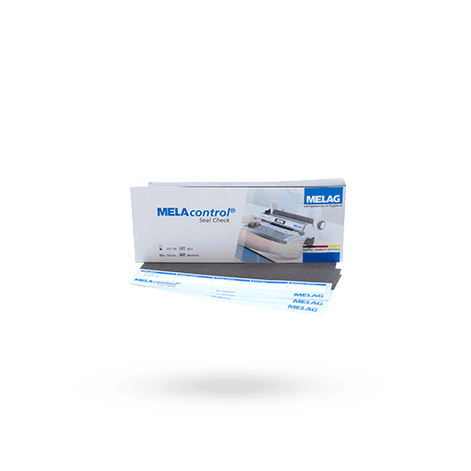
The daily Seal Check of the seal seam can be performed with the MELAG Seal Check. MELAG Seal Check is a secure and efficient method with which to verify the seal seam. The contrast on the print sample permits the practice team to determine quickly and easily whether the film layer has fused with the paper side correctly. The Seal Check is inserted in the sterilisation pouch and is successful if the complete seal seam contains even discolouration and sharp contours. For the traceable documentation of the routine tests of a sealing device, we offer the MELAconnect App. The app helps you to archive the Seal Checks easily via the camera on your smartphone or tablet.

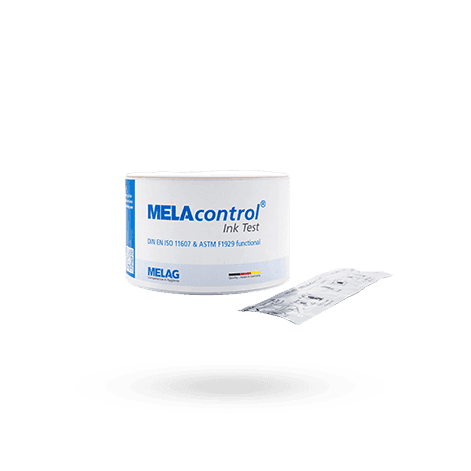
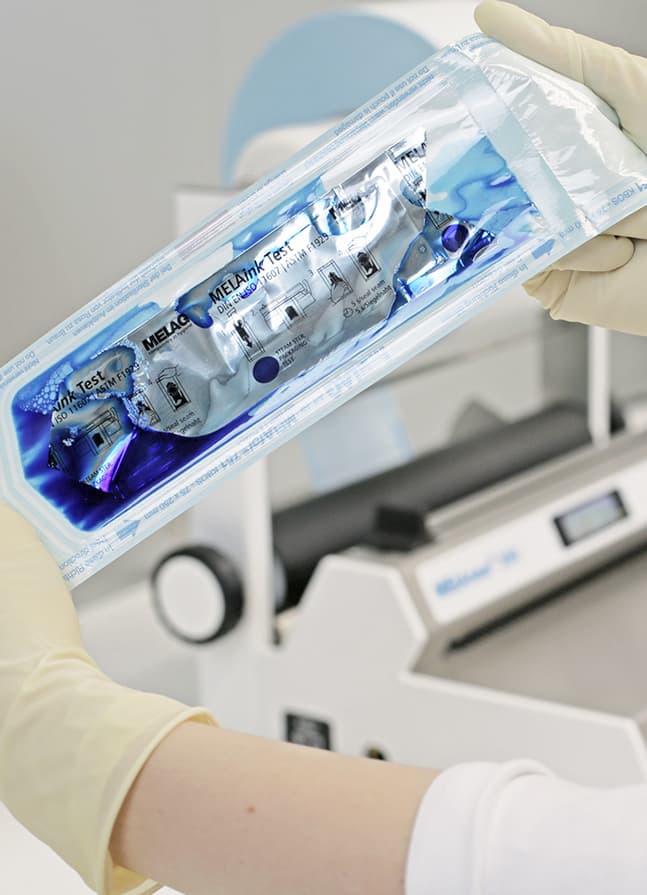
The weekly MELAink Test enables even better recognition of possible irregularities in the seal seam. The ink test is placed in a transparent sterilisation package and sealed. Then the ink is pressed out of the test bag in the direction of the seal seams. The spread of the ink tests all four sides of the packaging, revealing irregularities, flaws or channels in the seal seams.

The seal seam stability test is used to perform an annual check of the seal seam for tensile strength (tear-resistance) and validation of the packaging process using MELAG sealing devices. The seal seam stability test is a standardised test procedure for the performance qualification of your sealing device in accordance with international standards. The test is performed with a high-tech electronic test machine for guaranteed valid results. Download the application form for a MELAG seal seam stability test. The form depicts all the necessary steps for performing the seal seam stability test.

Conclusion: Sealing device for packaging instruments

In medical and dental practices, the sterilisation of medical instruments plays a central role in ensuring safe and infection-free treatment. Sealing devices are crucial for maintaining the sterility of medical instruments by sealing them airtight in special sterilisation pouches. This protects the instruments from contamination by bacteria, viruses and other harmful microorganisms until their next use.

A sealing device typically uses heat to fuse the edges of the sterilisation pouches and create a tight seal. The operation of the device is simple and only requires inserting the pouch into the device, setting the required temperature and pressure, and starting the sealing process. Modern sealing devices often offer adjustable parameters that allow the sealing conditions to be optimally adapted to the type of material and thickness of the bag.

To ensure consistent performance and reliability, modern sealing devices monitor the relevant process parameters and document them on a data carrier. In addition, tests such as the peel test and seal check should be carried out regularly to ensure that the seal complies with medical standards. Such tests help to identify and rectify any defects in the sealing process at an early stage.

The selection of the appropriate sealing device depends on several factors, including the type of instruments to be sealed, the quantity of pouches to be processed daily and the specific requirements of the practice. Various types of sealers are used in medical facilities, particularly bar sealers and rotary sealers, which differ in their operation and application.

Bar sealers, also known as impulse sealers, use a sealing bar with an integrated heating wire that heats up when switched on. They are ideal for practices with lower sealing requirements, as they produce each seal individually. These devices are easy to operate and require less energy due to the short heating phases.

In contrast, rotary sealers are designed for higher throughput rates. They have a conveyor belt that automatically transports the pouches to be sealed through the machine, making them an efficient and time-saving solution for facilities with high volumes of instruments to be sealed. Due to their continuous operation, rotary sealers are ideal for larger clinics or dental practices that require fast and continuous processing.

High-quality sealers offer adjustable temperature and pressure settings that allow customisation to different materials and pouch sizes.
Our customers love MELAseal

Our success is based on trust: With our sealing devices, we stand for quality, reliability and service and support practices and clinics worldwide.

4,9

24 Customer Reviews

Melaseal 300 Angebot

Reviews by Customers

May & Thannhäuserverified

Sterilization and packaging: all-round safety

After quick and safe packaging with the MELAseal sealing device, we take care of sterilization in the Vacuklav. The perfectly coordinated MELAG system guarantees an efficient hygiene chain.

Linz Dental Centreverified

Daily reliability in everyday practice

The MELAseal 200 has been running for over a year without a single failure. The robust workmanship and fast heat-up time impress us every day. An absolute recommendation for any practice that prioritises quality.

Petra Volz [fotzn'spanglerei]verified

MELAseal - Love in the packaging process

Our girls love the MELAseal. 😍😍 melag-love forever! Great appliances, produced in Berlin, regional suppliers, SENSATIONAL team 😍

Practice at Marien Hospitalverified

Efficient packaging with MELAseal

Before sterilization, we pack large quantities of instruments with the MELAseal. This enables simple and fast processing, just like on an assembly line, and an easy-to-understand operating concept.

Dr Müllerverified

Perfect sealing, safe hygiene

The MELAseal sealing device is perfect and guarantees flawless sealing seams. It is versatile, compact and easy to use. I recommend it to any dentist who is looking for a reliable and efficient device for the packaging process.

Züri Zahniverified

Individual instruments perfectly packaged

We pack individual instruments quickly and securely with the MELAseal rotary sealer. The sealing device impresses us across the board!

Practice Dr Lehmannverified

The perfect solution for small preparation corners

MELAseal was the perfect choice for our small practice - reliable, easy to use and ideal for our daily patient volume. The compact size fits perfectly in our reprocessing corner.

Dr Kleinverified

The perfect basis for protection against recontamination

Easy handling, fast results. The bar sealer is the perfect entry-level device, especially for smaller practices like ours. We are completely satisfied.

Dentists on the market squareverified

Quantum leap with the MELAG sealing device

Switching from our old sealing device to the MELAseal was a real quantum leap. The speed and the consistent quality of the sealed seams are excellent.

ENT med. northverified

Instrument reprocessing with a system

The MELAseal forms the perfect link between the MELAG autoclave and thermal disinfector in our practice.

Dental practice SmileCareverified

MELAseal: Permanently reliable

The price-performance ratio is just right here. The MELAseal is perfectly adequate for our prophylaxis sets. Even after several years, the appliance is still running like on the first day.

Dr Herzogverified

MELAG: Quality that lasts

Always perfect results, even after several hundred applications. Simply reliable - typical MELAG.

Dental team in Zehlendorfverified

MELAtherm and Vacuklav - the best combination for us

For us, MELAtherm and Vacuklav simply belong together. The combination gives us a consistently safe feeling in our day-to-day work because our processes are clearly structured and the instruments are reprocessed reliably. With the MELAG system, we know that we can guarantee maximum safety for our patients at all times.
Hottelmann dental galleryverified

I appreciate the reliability and simple operation of MELAG appliances.
Dr. Duval Aloush from Dubaiverified
From the best, for the best: Dr Duval trusts the MELAG system solution, manufactured with 100% German quality, to ensure outstanding workflows and safe treatments.

Dr. Gebhardt, Biss45verified

System solution from MELAG

We rely on an autoclave, a sealing device and a thermal disinfector from MELAG for reprocessing. The optimally coordinated system ensures uniform operation and enables new colleagues to be trained quickly. If we have any questions or uncertainties, MELAG support is always on hand to provide reliable assistance.

Denta-Medica Dental Clinicverified

Workflow on a new level

We deliberately wanted to move away from individual stand-alone solutions and towards a well thought-out overall system. With MELAG, we have found exactly that. The thermal disinfector, sealing device and autoclave are perfectly matched to each other and interlock seamlessly. This saves valuable time, minimizes sources of error and creates clear, reliable processes in everyday life. It is particularly pleasant that everything seems to come from a single source. My team really appreciates this clear structure.

Dr. Kayla Tehverified

MELAG System Solution - Made in Germany 🇩🇪

With the Vacuclave and the MELAtherm, we have made exactly the right choice for our premium approach in our dental practice. The devices are reliable and durable. Compared to other models we have used before, we can fully rely on the system here. There are no unplanned breakdowns. In addition, the MELAG team is always easy for us to contact. So if you are looking for the highest quality standards, there is no way around MELAG.

Southpaws Veterinary Clinicverified

MELAtherm and Cliniclave 45 - The ideal duo for our veterinary clinic

The MELAG washer-disinfector and large autoclave ensure a high level of infection prevention and the best possible protection for both animals and humans. I truly appreciate the German quality and MELAG’s strong specialization in the field of instrument reprocessing.

Unident Union Dental Spaverified

With the aligned devices of the MELAG System Solution, our patients and the entire team are perfectly protected.

At our clinic in Wrocław, we rely on the perfectly coordinated MELAG system solution with MELAtherm, MELAseal and Vacuclave. Automated reprocessing in the MELAtherm saves us an enormous amount of time and reliably delivers clean, dry instruments. The MELAseal seals them quickly and safely before they are quickly sterilized in the Vacuclave thanks to short cycle times. This means our hygiene processes run efficiently, safely and without interruptions - and we gain more time for what really counts: treating our patients.

Smart Dental Clinic Teamverified

An investment that pays off in everyday life

The interaction between MELAtherm, MELAseal and our Vacuclave makes a huge difference. No isolated solutions, but a coordinated workflow. You can tell that the system has been designed holistically. My team particularly appreciates the ease of use and the reliability of the process. We would choose MELAG again at any time.

Dr. Cesare Parisverified

Top hygiene processes - made in Germany ⭐⭐⭐⭐⭐

With several treatment rooms and eight practitioners, efficient, safe workflows and absolutely reliable technical equipment are essential. This is precisely where the practice consistently relies on MELAG. Thanks to the sophisticated system solution, instruments are reprocessed in accordance with the highest hygiene standards, ensuring smooth processes in everyday practice. For Dr. Cesare Paris, patient protection is the top priority - as is the safety of the entire team. With the MELAG devices, the practice can guarantee a high level of quality and safety at all times and work efficiently at the same time.

University of Sarajevoverified

MELAG also impresses at our university

Since 2019, the Faculty of Stomatology at the University of Sarajevo has fundamentally modernized its CSSD and opted entirely for a system from MELAG - a step that has paid off in every respect. With 8 MELAtherm, 8 Vacuklav, 3 Cliniclave 45 M and 3 MELAseal rotary sealers, a high-performance, perfectly coordinated infrastructure has been created. The cleaning and sterilization processes now run reliably, reproducibly and much more efficiently.

The consistent performance of the devices is particularly impressive: every cycle meets the highest hygiene standards and gives the team maximum safety. At the same time, throughput times have been noticeably reduced, which considerably eases the burden on internal processes and allows more focus on teaching and patient care. Despite the high number of devices, the CSSD remains optimally organized and structured to save space thanks to the well thought-out, compact design. The investment is also economically sustainable - thanks to its robust design, low downtimes and long-term operational reliability.

Dr. Florin Lazarescuverified

Hygiene processes are now centrally anchored in our practice workflow

Space constraints, staff turnover and constant time pressure in our daily practice make it essential for us to ensure that every process runs smoothly. This is where the MELAG system, consisting of a sealing unit, an autoclave and a thermal sanitizer, comes in.

The workflows are perfectly coordinated - from loading and short cycle times to complex processing concepts. This saves us precious time every day and reduces errors, especially when training new employees.

MELAG is fully cooperative and provides us with optimal support. The system provides us with security, structure and efficiency throughout the entire training process."

Frequently Asked Questions

An autoclave is a steam sterilisation device that is primarily used in medical facilities, laboratories, dentistry and the food and pharmaceutical industries. Its main purpose is to completely kill microorganisms such as bacteria, viruses, fungi and even heat-resistant spores in order to reliably sterilise instruments, materials or liquids.

The terms distilled water, demineralised water and demineralised water (fully demineralised water) are commonly used. Distilled or demineralised water as specified by the manufacturer to prevent limescale/corrosion and ensure process reliability. While distilled water (distilled water) is a term that implies treatment by evaporation and condensation of the water, demineralised water means that there are no minerals in the water that could damage the autoclave or the instruments. The same applies to demineralised water. The respective water quality assumed for these three terms may well be identical. Demineralised water or demineralised water is usually produced using water treatment systems based on the principle of ion exchange or reverse osmosis.

The requirements for demineralised water are defined in DIN EN ISO 13060 and DIN 285. A corresponding reference on the labels of the canisters gives you certainty about the suitability of the demineralised water for sterilisation.

Fill the water into the storage tank of the stand-alone autoclave. Before each programme start, the water quality is checked by measuring the conductivity. The autoclave issues a warning message if the water quality is 40 µS and an error message if it exceeds 60 µS. If there is water of insufficient quality in the storage tank, it is not possible to start the programme. The abbreviation µS stands for microsiemens. The unit of measurement defines the electrical resistance via the quantity of dissolved particles in the water.

The automatic supply of feed water to MELAG autoclaves has become established in almost all practices. The water treatment systems of the MELAdem series are available for this purpose. The MELAdem 47 works according to the reverse osmosis process and the MELAdem 40 and MELAdem 53 according to the ion exchange process. Once the tap water has been treated, you have optimum demineralised water with a conductivity of between 1 and 5 µS for sterilisation.


Maintenance and validation of an autoclave must be carried out regularly in order to ensure long-term safe sterilisation. Maintenance is usually carried out every two years or a specified number of cycles in accordance with the manufacturer's specifications and includes functional checks and the replacement of wearing parts. Validation or performance checks are carried out at specified intervals, usually also every two years, and additionally whenever relevant changes occur - for example, after repairs to relevant components, after adjusting process parameters or loading patterns.

Together, these measures ensure that the autoclave works reliably and that all sterilisation processes are reproducible and conform to standards.

International hygiene guidelines specify the performance of maintenance services to guarantee the reliable operation of the steam sterilisers. Only technicians with requisite training may be entrusted with performing this service task. Steam sterilisers and
washer-disinfectors are usually equipped with maintenance counters, which issue a maintenance message after completing a specified number of cycles or time interval.

Other manufacturers of autoclaves use different maintenance sets and spare parts. During the product development stage, MELAG places considerable value on sustainability, thus aiming to minimise the numberof spare parts for later maintenance while also reducing service times.
The most important maintenance task performed on MELAG products is the inspection of all relevant components ensuring the functionality of the device, as well as the replacement of wear parts.

MELAG-trained technicians perform the maintenance measures quickly whilst seeking to minimize costs. The obvious advantage of using the MELAG system solution is that the maintenance can be performed quickly and most of the time in one sitting. However, the associated cost-savings are not achieved when setting up a multi-brand decontamination workflow that requires different service technicians to carry out inspection at different times of the year on different devices. MELAG offers a hassle-free, co-ordinated and cost-friendly
alternative.

In addition to maintenance costs, the consumption costs for energy and water drive up the cost of steam sterilisation. MELAG engineers attach significant importance to achieving low consumption figures without a loss in quality. Additional costs can also result from unforeseen repairs of the autoclaves. MELAG stands for quality “Made in Germany”. Our entire product range is produced exclusively in Berlin. With over 160 R&D, IT and testing engineers, we strive daily to improve quality. MELAG products have developed a reputation for being reliable, user friendly and low maintenance. Taking into consideration all the costs incurred throughout the devices life span, the total cost of ownership of MELAG devices is significantly lower than that of their competitors, even those initially retailing at lower prices.

Get in our video tutorial all important information about the correct loading of the autoclave / steriliser. The video tutorials for the compilation of an individual loading pattern can be found on our Multimedia channel.

Successful sterilisation requires correct cleaning and disinfection of the instruments.

Please always comply with the reprocessing instructions from the instrument manufacturer. When performing instrument care, it is imperative not to use water-repellent care products or water-impermeable oils. Use only those care agents suitable for steam sterilization.

Correct loading of the autoclave is a prerequisite for effective sterilization and best drying results. In this regard, please comply with the following principles while loading the autoclave:

  • Place textiles on the top tray

  • Place the sterilisation containers at the bottom

  • Place unwrapped instruments at the bottom

  • Place heavy loads at the bottom

  • Place sterilisation packaging (foil and paper pouches) on the top trays. Except when sterilising in combination with textiles: In this case, place them at the bottom.

As far as possible, sterilisation pouches should be placed in an upright position in the steam steriliser. If you place the sterilisation packaging directly on a tray, make sure that the film side faces upwards to prevent the development of water droplets.

The fractionated vacuum used by Class B autoclaves also permits the sterilisation of double wrapped instruments e.g. instruments wrapped in two pouches or in a pouch and a sterilisation container. Closed sterilisation containers (preferably made of aluminium) must be perforated on at least one side to permit steam injection. The MELAstore-Boxes and the MELAG sterilisation containers ensure the best-possible sterilisation and drying results.

Regularly checking the autoclave is an important part of hygiene management in practices and clinics.

Testing sterilisers using bioindicators used to be carried out every six months or after 400 sterilisation batches. However, this requirement originates from an outdated chapter of DIN 58946-6, and the updated standard DIN EN ISO 17665-1 does not include a corresponding reference to the use of bioindicators.

Biological indicators such as spore tests are not suitable for assessing the sterilisation process. This is because sterilisation requires a longer holding time than is necessary to kill the biological indicators.

The use of a suitable indicator system is recommended in order to monitor sterilisation on a batch basis. The sterilisation result of hollow instruments is checked with a Helix test body. As a system provider, MELAG offers you the two helix test devices MELAcontrol Helix and MELAcontrol Pro for functional testing of its class B autoclaves. Both test devices fulfil the requirements of EN 867 - 5. Please test class S autoclaves with a class 5 indicator.

Daily routine tests are required for the safe operation of an autoclave. These include the vacuum or leak test, which checks for leaks and correct negative pressure generation, as well as the Bowie thickness or helix test, which verify correct vapour penetration and air removal. These tests are carried out regularly before the sterilisation cycles and must be fully documented to ensure process reliability.

In addition, the performance assessment within the validation shows that the sterilisation parameters have also been achieved at the load in the autoclave. Validation is therefore a check of the sterilisation success with practice-specific sterilisation material, sterilisation packaging and loading at the autoclave installation site. To ensure successful sterilisation in the long term, this performance assessment must be repeated at regular intervals in the practice and clinic.

Depending on the model, MELAG autoclaves have several standardised sterilisation programmes that are adapted to different materials and load types. The universal programme at 134 °C is used most frequently, which is suitable for both wrapped and unwrapped instruments and is the standard in most practices. For instruments that are available more quickly, a fast programme at 134 °C is available, which is specially designed for unwrapped items. For more sensitive materials such as certain plastics, the gentle programme at 121 °C is usually used, which works at a lower temperature but with a longer holding time. Many MELAG autoclaves also offer a prion programme at 134 °C, which meets particularly high safety requirements. Depending on the model, there are also special programmes for liquids or for special documentation and drying requirements. Overall, the choice of programmes enables sterilisation to be tailored precisely to the material, packaging and area of application.

With a vacuum test, steam sterilisers monitor how well all steam-carrying parts are sealed. This test is carried out in accordance with DIN 58946-6: 2002 and is thus prescribed by the national hygiene regulations.

If you operate a large autoclave (>1 STU), we recommend carrying out this test on a monthly basis. For a table-top steam steriliser, the test is recommended to be carried out once a week. Ideally, this will be done on Monday morning before work starts, as a cold sterilisation chamber without loading is required.

To start the test, remove the tray mount from the sterilization chamber and check if it is dry. After closing the steam steriliser, use the control panel to select the vacuum test. Now the air will be evacuated from the chamber of the autoclave. The test starts automatically after pressure equalisation has taken place. During the test, the pressure change within the chamber per unit of time is measured to see how much air enters the unit during. If the leak rate exceeds a certain value, the autoclave will issue a malfunction message on the display. If the test is successful, you can start with the instrument decontamination process.

Learn more about routine tests for an autoclave in our video-tutorial.

Daily or regular routine tests must be carried out in accordance with the applicable standards and manufacturer's specifications. These include in particular the Bowie-Dick test or helix test to check air removal and steam penetration as well as the use of chemical indicators in each batch. If necessary, biological indicators must also be used in accordance with official and standard specifications. All test results must be documented and archived in a traceable manner.

The Bowie-Dick test must be carried out every working day before the first sterilization. It serves as proof of sufficient air removal and uniform steam penetration in the sterilizer and must be documented.

The use of a helix test device is particularly necessary for batch control when reprocessing medical devices of category "critical B". This simulates complex hollow instruments and ensures that even lumens that are difficult to access are sufficiently sterilized. The results must also be documented for each batch.

Fractionated pre-vacuum is a process used in modern autoclaves in which the air in the sterilisation chamber is not removed in a single step, but through several successive vacuum and steam pulses. This repeated sequence is particularly effective at displacing air from cavities, narrow lumens and wrapped instruments, allowing saturated steam to reach all surfaces safely and completely. This process is crucial for the sterilisation of hollow bodies and complex instruments, as even small air residues would block the entry of steam and thus impair the sterilisation effect.

Modern class B autoclaves generally require between 15 and 45 minutes per sterilization cycle, depending on the load type, load quantity and selected program. Shorter running times are possible, particularly with optimized fast programs and low loads, while complex loads (e.g. hollow instruments or "critical B" products) require longer cycle times.

To increase energy efficiency, current appliances have various technical functions such as eco programs, intelligent standby modes and heat recovery systems. These significantly reduce energy and water consumption in everyday practice, especially with irregular use or between sterilization cycles.

Targeted load optimization also helps to increase efficiency: By utilizing the sterilization chamber sensibly and adapting the programs to the respective load, cycle times can be shortened, resources conserved and process economy improved without compromising the validity of sterilization.

EN 13060 is particularly important for small steam sterilisers, as it defines the technical requirements, test methods and performance characteristics of these device classes. Among other things, it specifies which sterilisation cycles are permitted, how the devices must be designed and how their effectiveness must be verified. In addition, various national hygiene recommendations and legal requirements apply in Germany, in particular the guidelines of the RKI and KRINKO/BfArM, which describe in detail how medical devices must be reprocessed and which quality and documentation standards must be complied with. In addition, depending on the facility, further regulations on occupational health and safety, water quality and the validation of reprocessing processes apply. Taken together, these standards and regulations ensure that autoclaves are operated safely and that reproducible, standard-compliant sterilisation is achieved.

Hollow bodies can only be safely sterilised if an autoclave has class B cycles with fractionated pre-vacuum, as these processes reliably remove the air from narrow lumens and thus enable complete steam penetration. Equally important is the correct packaging, such as special sterilisation films or cassettes that allow steam to pass through. The instruments must be arranged in such a way that openings are unobstructed and no kinks or blockages occur. A helix test, which simulates the penetration of long, narrow cavities, is regularly used to check process reliability. In addition, the manufacturer's instructions for straight and contra-angle handpieces and other sensitive hollow instruments should always be observed, as these often contain specifications for cleaning, lubrication and sterilisation parameters.

The process documentation of the autoclave is essential as proof that a sterilisation programme has been successfully completed. Documentation can be carried out manually or digitally using a software solution. In our video tutorial, you can find out more about the integrated documentation and release of the sterilisation batch with our premium-class autoclaves.

Manual documentation and release are carried out using a documentation sheet from our MELAdoc series. The release decisions are recorded on this sheet by hand. You can further simplify the documentation process with the help of the MELAdoc label printer.

Release after sterilisation begins with checking and documenting that the process has been carried out correctly. The relevant process parameters are stored in a log and the success of the batch is shown on the autoclave display. In addition, the sterilisation packaging is checked for integrity and dryness, and finally the sterilised items are labelled. Please always label the packaged instrument behind the seal seam on the film side of the sterilisation packaging. After using the instrument, you can remove the label from the film packaging and transfer it to the patient file. This documentation completely fulfils the reverse burden of proof in your medical or dental practice.

The release of the sterilisation batch on the documentation sheet includes the following points:

Personnel, device and batch number Sterilised on / Usable until Programme / Load Successful sterilisation: Yes / No Batch indicators (e.g. MELAcontrol Helix) OK: Yes / No Release granted: Yes / No Signature for release

The reprocessing logs can be output to a storage medium, such as the MELAflash CF card, for data backup. No additional software is required to open the logs. The files can be opened with a word processing program (Word or text editor). Please observe the statutory retention periods when storing the release documents.

MELAtrace fulfils the requirements for complete documentation and release quickly, securely and paperlessly. The software solution links the reprocessing steps of cleaning and disinfection with sterilisation to ensure comprehensive and complete documentation of instrument reprocessing. MELAtrace guides you step by step through the programme. The batches are released via the system and the labels for identifying the instruments are printed out via the MELAprint 60. By scanning barcode labels, digital assignment in patient management software is even ensured.

Further information on the documentation and release of instrument reprocessing can be found here.

The regular chamber cleaning of your autoclave is an important step of the instrument reprocessing workflow and enables a long-term protection of the device.

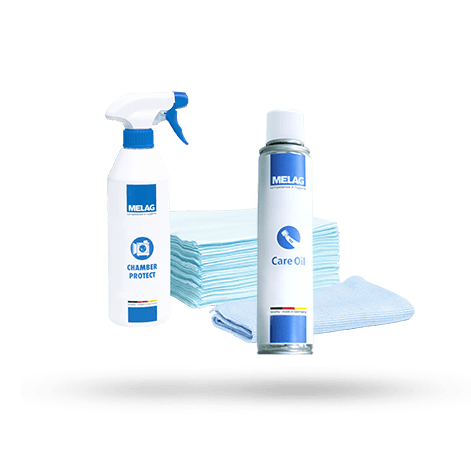
For ideal cleaning results and long-lasting shine the MELAG Chamber Protect cleaning set should be applied to the autoclave once a week.

The cleaning set, including the Chamber Protect spray, 50 lint-free cloths and 1 microfibre cloth saves the chamber from discolouration and depsosits and removes even soiling that is invisible to the eye. Approved through extensive material compatibility tests it is particularly gentle on the material of the chamber and door seal and therefor ideally matched to all MELAG steam sterilizers.

Before starting the chamber cleaning, the autoclave should be switched off and cooled down. The Chamber Protect Spray is then sprayed onto the sterilization chamber and the inside of the door and is spread with a lint-free cloth.

After a short exposure time (approx. 3 minutes), the stainless steel surfaces are moistened with demineralised water and then wiped with another cloth that has also been moistened. After a further 5 minutes exposure time, the sterilisation chamber and the inside of the autoclave door should be dried with the microfiber cloth.

The cleaning set can be applied to your autoclave as well as to all of your trays.

The process documentation of the autoclave is vital as verification of a successfully completed sterilisation program. The documentation can be done manually as well as digitally using a software solution. Learn more about the digital documentation and approval process via the colour-touch Display of the Premium-Class Evolution in our video-tutorial.

Manual documentation and approval takes place with the help of a documentation sheet from our MELAdoc articles. The approval decisions are then recorded by hand. With the help of the MELAdoc label printer, you can further facilitate the documentation process.

After sterilisation, batch approval begins with the review and documentation of the correct process. The relevant process parameters are saved in a log file and the success of the batch is displayed on the autoclave’s display. In addition, the sterilisation packaging is checked for integrity and dryness, and finally the labeling of the sterilised material takes place. Please always mark the wrapped instruments behind the seal seam on the foil side of the sterilisation packaging. After using the instruments, you can remove the label from the foil packaging and transfer it to the patient record.

The approval of the sterilisation batch on the documentation sheet requires following information:

  • Personnel-, equipment- and batch number

  • Sterilised on / Usable until

  • Program / Loading

  • Successful sterilisation: yes / no

  • Batch indicators (e.g. MELAcontrol Helix) OK: yes / no

  • Release granted: yes / no

  • Signature for release

The log files may be stored on an output medium, such as the MELAflash CF card, for data backup. No additional software is required to open these files. The log files can be simply accessed with a word processing software (e.g. word or text editor). Please note the legal retention periods when storing the approval documents.

MELAtrace meets the requirements for complete documentation and approval quick, secure and paperless. The software solution combines sterilisation, cleaning and disinfecting steps to ensure comprehensive and complete documentation of instruments reprocessing. MELAtrace guides you step by step through the approval process. The batches are released via the system and the labels for marking the instruments are printed out via the MELAprint 60. Scanning barcode labels even ensures digital assignment in a patient management software.

Learn more in our video tutorial about the correct filter exchange procedure for the MELAdem 40 water treatment system:

Watch now

The MELAdem 40 water treatment unit supplies the steam steriliser with demineralised water. The Evolution series automatically tests the conductivity of the demineralised water during every sterilisation procedure and issues a warning if the water quality is too low. Please change the mixed-bed resin cartridges as soon as the warning is displayed. Before changing the cartridges, please close the tap of the water line. Then start the Universal-Program and abort it after c. 20 seconds. You can now open the cartridge container using the wrench in the housing cap of the MELAdem 40. Please slide the wrench over the cartridge container and turn it clockwise.The water in the cartridge container can be poured into the drain and the exhausted cartridges can be disposed of in the domestic waste. Please insert the new cartridge in the thoroughly rinsed cartridge container and screw the container tight by hand and then with the wrench. Repeat this procedure for the second mixed-bed resin cartridge. After you have re-opened the water tap and have checked the MELAdem 40 for leaks, your steam steriliser and water treatment unit are ready to use.

Our decades of development experience and focus on the instrument reprocessing segment are the basis for our innovative and permanently reliable products - made in Germany. Learn more about the differences between Premium and Pro-Class autoclaves in the following section:

The advantages of the Premium-Class Evolution

✓ Record operating times: Very fast cycle times of 10 to 25 minutes due to the patented double-jacket technology
✓ Intelligent drying DRYtelligence: Optimum drying results and an 80 % reduction in drying time
✓ Very high loading capacities: For up to eight trays and 9 kg
✓ XXL Colour-Touch Display: Intuitive user interface with integrated software for documentation and approval
✓ Documentation interfaces: CF card slot and two network interfaces in the device at no extra cost
✓ Video Tutorials: how to use the autoclave explained quickly and easily with video tutorials
✓ MELAconnect App: Access the autoclave status and program progress at any time via mobile app
✓ Customized to your decontamination room: As a stand-alone solution or autoclave with fixed water connection in chamber sizes 18 and 24 litres

Discover the product highlights in our video of the Premium-Class Evolution.

The advantages of the Pro-Class

✓ Short operating times: Fast cycle times from 20 to 50 minutes
✓ High loading capacities: For up to 6 trays and 7 kg
✓ Intuitive operation: With MELAG four key concept
✓ Serial interface: For paperless documentation with MELAflash or MELAnet Box
✓ Customised to your decontamination room: As a stand-alone solution or autoclave with fixed water connection in boiler sizes 17, 23 and 29 litres
✓ Vacuklav 24 BL+: With 60 cm chamber depth for sterilization of extra-long instruments such as endoscopes

Discover the product highlights in our Pro-Class video.

Hygiene measures to prevent infection are more important than ever in times of COVID-19. In medical practices and clinics, special attention must be paid to the reprocessing of instruments in addition to the new distancing and hygiene rules. This is because sterilisation is the only way to completely inactivate all pathogens capable of reproducing and thus achieve absolute safety for patients and the team.

Numerous questions arise when choosing an autoclave. In terms of reliability, effectiveness and a wide range of applications, there can only be one answer for a medical practice: Sterilisation with saturated steam at 134 degrees Celsius. Steam sterilisation enables rapid reprocessing of unwrapped and wrapped instruments using a reproducible process. With the help of the integrated process documentation, legally compliant proof of error-free reprocessing can be provided.

Air inhibits sterilisation and must be removed from the chamber and the hollow bodies of the instruments in advance. DIN EN ISO 13060 classifies autoclaves according to their evacuation capacity into classes B, S and N. The type and complexity of the instruments determine which sterilisation process is suitable. For hollow instruments and packaged instruments, a class B autoclave with fractionated pre-vacuum is the state of the art and the first choice for studios.

The fractionated vacuum process of a class B autoclave reduces the air in the sterilisation chamber by repeatedly evacuating the air and allowing steam to flow in. This process guarantees optimum saturated steam conditions for sterilising not only solid and porous instruments, but also complex hollow instruments such as handpieces and endoscopes.

Watch the video to find out more about the sterilisation process in a class B autoclave.

Sterile pouches only remain sterile if they are removed from the autoclave completely dry and undamaged after the sterilisation process, as moisture or tears would impair the barrier effect. They must then be stored in a cool, dry and dust-free place, ideally in closed cabinets, and the shelf life and recommendations of the packaging manufacturer must be observed. If sterile bags are still damp after the cycle, this is often due to overloading, unsuitable or too tightly packed packaging, instruments stacked too tightly or insufficient drying time. Damp pouches are not considered sterile and must therefore not be used; instead, loading, packaging material and drying phase should be checked and optimised to ensure completely dry, safe sterile supply in the future.

The sterile goods must not be released if there are error codes or wet packs; the batch must be labeled and documented. The relevant influencing factors must then be systematically checked (water quality, filters, seals, loading, packaging, drying and vacuum performance). The cycle logs must be read out and evaluated. The MELAG Troubleshooting Portal should be used for support(https://www.melag.com/service/troubleshooting). If necessary, contact the service department or manufacturer.

Batch protocols, barcode data and user logins are automatically transferred to the practice network, a DMS or reprocessing software via LAN, WLAN or USB. Data processing is carried out in compliance with the applicable data protection requirements (GDPR).

Steam sterilization is characterised by a fast and gentle effect on materials, enables reliable penetration of even complex cavities and is therefore considered the standard procedure for reprocessing medical devices. In contrast, hot air sterilization (dry heat) is significantly more time-consuming and can place greater stress on materials.